
Where Cultural Infrastructure Is Heading in 2026
Across Nordicity’s projects, the same themes keep surfacing - not as “nice-to-haves,” but as real planning and delivery considerations for cultural infrastructure projects. Here are five trends to watch:
Mixed Zoning Comes to the Neighbourhood: Across North America, cities are loosening rigid, single-use zoning to allow small-scale commercial, cultural, and community activity within residential areas - responding to demand for walkable neighbourhoods, local services, and everyday social connection. Cities like Toronto and Montreal are actively enabling mixed uses through zoning and land-use frameworks, while others including Winnipeg and many U.S. cities are advancing zoning reforms, pilots, and form-based approaches that point to a broader shift away from strict separation of uses.
When Temporary Becomes Transformative: Temporary cultural use of vacant buildings and spaces has moved from a “nice experiment” to a core activation strategy that gives artists affordable space while bringing energy to under-used areas. Organizations like London’s Meanwhile Space (meanwhilespace.com) and initiatives like Why Not Theatre’s Space Project (https://lnkd.in/eGVpPH_K) in Canada have exemplified how short-term cultural occupancy can be used to test uses, build audiences, and became a pathway to longer-term, more stable cultural space arrangements.
Cultural Land Trusts Gain Real Ground: Cultural land trusts are emerging as a way to lock in affordability and community control for the long term, borrowing proven models from housing and social infrastructure. Momentum is building in Canada through initiatives like Vancouver’s Cultural Land Trust (culturallandtrust.ca) and the Toronto Chinatown Land Trust (chinatownlandtrust.ca), alongside early acquisitions by Toronto’s Community & Cultural Spaces Trust (https://lnkd.in/epTgUg7y) - echoing long-standing international models.
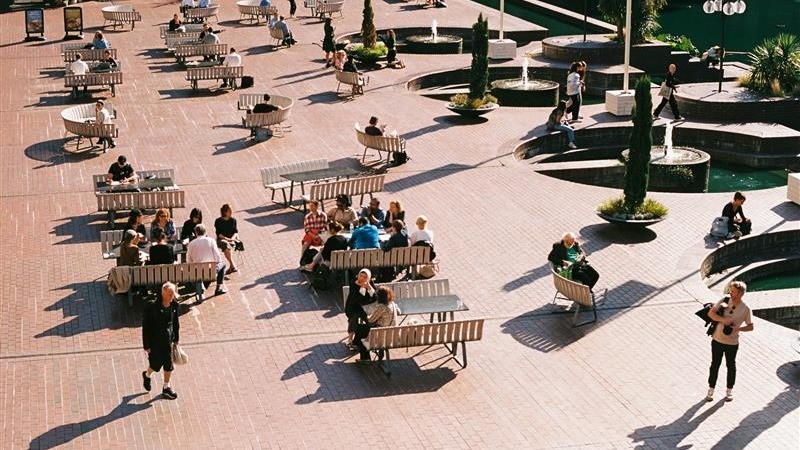
POPS- Less Leftover Space, More Intention: As density increases, privately owned publicly accessible spaces (POPS) are being treated less like bonus plazas and more like real civic rooms. Cities such as Toronto and New York City are refining design and governance guidelines to ensure these spaces are usable, welcoming, and genuinely public (not just technically accessible).
Green Design Is Becoming the Default (Not the Bonus): Even as policy signals fluctuate, sustainability remains embedded in cultural facility planning through funding, codes, and cost realities. Tools like Canada’s Green Municipal Fund (greenmunicipalfund.ca), alongside international precedents such as BLOX (blox.dk) in Copenhagen, signal that low-carbon design, adaptive reuse, and optimizing for long-term operations are increasingly becoming the baseline expectation when developing new civic and cultural facilities.
